Lord Krushna said –
“sambhava:mi yuge yuge” – I shall incarnate in this world in every Yuga (millennium)
A temple is place that disseminates the divinity that is existing everywhere. It’s a place where God resides, in all His completeness. Idols in a temple are called ‘Deities’. Since, our virtuous desires are granted by them through their various forms, these deities are accepted as the directly-visible-God Himself. At Divyasa:ke:tham, God is in three forms and in three different tiers.
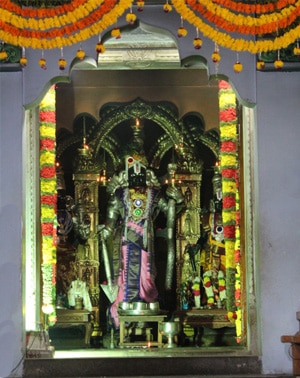
In the first level, He is in the form of Kodandaramaswamy, who beautifully dwells along with His retinue –Vishwakse:na, A:lwa:rs, Acharyas and others, filling our hearts with the virtue of humanity.
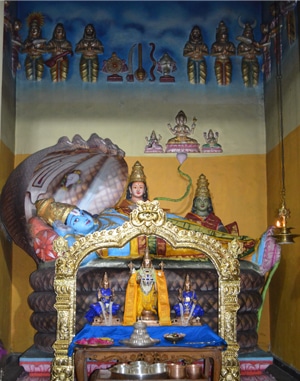
In the second level, He resides in the original, first form of Sri Ranganatha along with His consorts Lakshmiand Goda. Here, He dwells in all resplendence; accepts the prayers of Gods like Bramha and through their prayers protects all the living entities in this entire world. The divine-body of Lord Sri Ranganatha is blue in color, constituted with sa:lagra:ma:s [1] that have been acquired in worship from all the Divyadesams.Worshipping Lord Ranganatha, in Divyasa:ke:tham, is equivalent to worshipping the God in all Divyadesams.
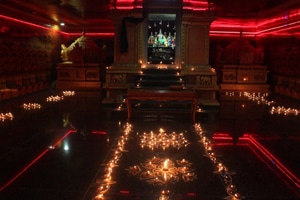
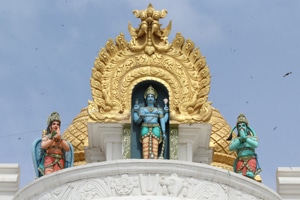
Now, in the third floor, God dwells as Vaikuntana:tha – Vaikuntana:tha is that beautiful form of God who along with His family resides in the thousand pillared pavilion of the heavenly abode called paramapadam that exists beyond the divine river viraja. Seated in a yogic position on a seat and worshipped by His ardent devotees, He endearingly stretches His hands as if calling us!
Lord Vaikuntanatha came down as Vyu:ha incarnation of Lord Ranganatha who carries the tasks of creation, sustenance and destruction. From this Vyu:ha incarnation of Lord Ranganatha, the Lord further came down as human incarnation of Sri Sitha Ramachandra Prabhu who is the presiding, primary deity of Divyasa:ke:thamtemple.
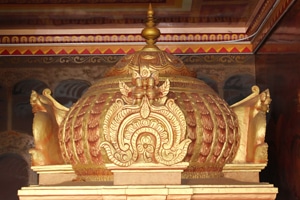
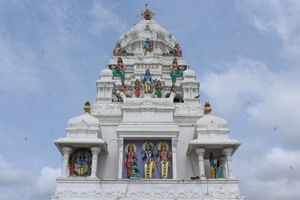
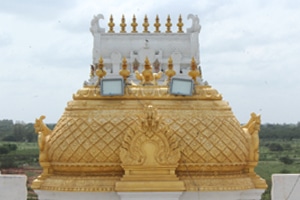
Atop these altars, there is the sanctum-tower called Sri Vima:nam which has taken the shape of eight-structured-tower. The dazzling divine discus Sri Sudarshanam is installed on top of the primary tower. Beneath this there are eight other towers. Each of the eight towers is embellished / consecrated with one syllable from the Narayana Ashtakshari, Manthram and the presiding deities regularly accept our propitiations.
A similar type of eight-tower sanctum is found only in one other place– Thiruko:ttiyu:r also known asGoshtipuram in South India. This also happens to be the first Divyade:sam sung by the A:lwars and also the place where the great Sri Ramanujacharya – the preceptor of Visishtadvaitha philosophy and also a great social reformer, climbed the temple tower and proclaimed the essence of the Narayana Ashtakshari to all interested devotees irrespective of caste, creed and gender.
Circumambulating the pra:ka:ram or the sanctum-walls of Divyasaketam once, is equivalent to directly circumambulating all the 108 Divyadesams. There are 108 altars (each dedicated to the presiding deity of each Divyadesam) in the sanctum-enclosure. These altars have been consecrated by the sacred Tulasiplant procured from 106Divyadesams. And hence, circumambulating the pra:ka:ram is equivalent to directly worshipping all the 108 Divyadesams.